




Employee wellness is increasingly recognized as critical to retention, productivity, and mental health. Dedicated wellness spaces signal organizational commitment to employee wellbeing, reducing stress, enabling recovery, and supporting mental health.
Wellness Benefits Research:
- Offices with dedicated quiet/wellness spaces: 28% reduction in reported stress
- Wellness spaces improve focus and work productivity by 19%
- Companies with wellness furniture: 9% lower burnout-related turnover
- Mental health support (via wellness spaces) reduces absenteeism by 12%
Phoenix Market Trend: Tech companies and professional services increasingly compete on wellness offerings. Furniture investment in wellness spaces is becoming a standard differentiator in a tight recruiting market.
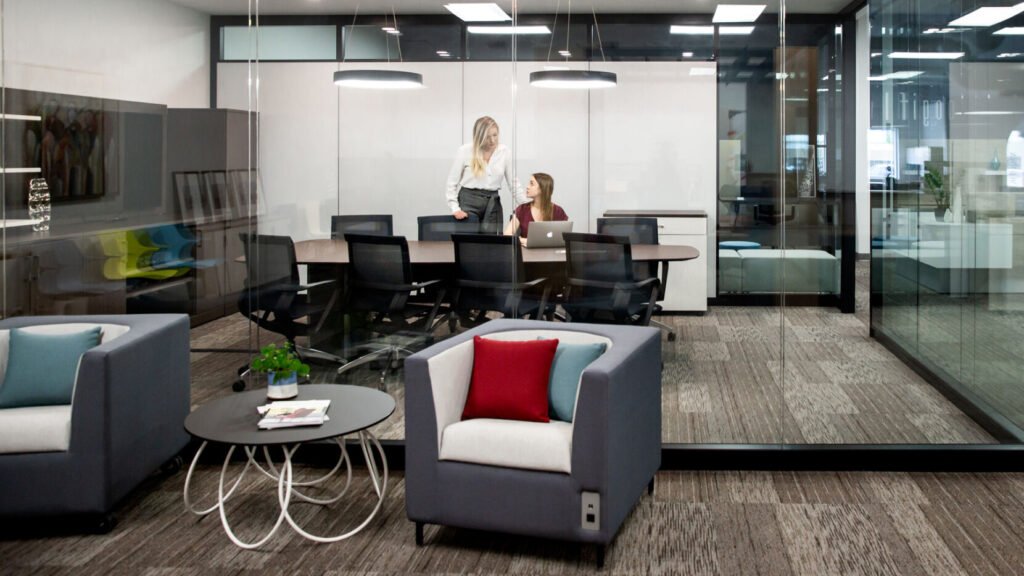
WELLNESS SPACE TYPES
Quiet/Meditation Spaces
Purpose: Employee recovery, stress reduction, focused thinking
Components:
- Comfortable lounge seating: $1,200-$2,500 (purchase); $18-$38/month (rental)
- Low/soft lighting (dimmers, warm tones): $400-$1,000 (purchase); $6-$15/month (rental)
- Plants/greenery (air quality, calming): $300-$800 (purchase); $4-$12/month (rental)
- White noise/soundscaping (optional): $200-$500 (purchase); $3-$8/month (rental)
Typical Use Case: Employees take 5-10 minute breaks during the day, a quiet space for a mental reset without leaving the office
Focus/Deep Work Nooks
Purpose: Reduce distraction for concentrated work
Components:
- Privacy pod or enclosed booth: $5,000-$10,000 (purchase); $75-$150/month (rental)
- Ergonomic desk + chair: $1,500-$2,500 (purchase); $22-$38/month (rental)
- Minimal visual/audio stimulation (focused environment)
Best For: Engineers, designers, analysts requiring deep focus without open-office distraction
Wellness Lounge (Larger Format)
Purpose: Comprehensive wellness environment combining quiet + comfortable seating + wellness amenities
Components:
- Multiple lounge seating pieces: $3,000-$6,000 (purchase); $45-$90/month (rental)
- Yoga mats, meditation cushions: $400-$1,000 (purchase); $6-$15/month (rental)
- Plants, lighting, art: $1,500-$3,000 (purchase); $22-$45/month (rental)
- Optional: Sound system, diffuser, water feature: $800-$2,000 (purchase); $12-$30/month (rental)
Best For: Larger companies (100+ employees) with a budget for comprehensive wellness
WELLNESS SPACE DESIGN PRINCIPLES
1. Quiet Environment
- Soundproofing or strategic placement (away from high-traffic areas)
- White noise machines if soundproofing is limited
- Soft background sounds (nature sounds, water features optional)
2. Comfortable, Supportive Seating
- Recliners or high-back lounge chairs (support relaxation posture)
- Adequate cushioning (physical comfort)
- Flexible positioning (adjust as needed)
3. Lighting Design
- Avoid harsh fluorescent (standard office lighting)
- Dimmers or warm bulbs (low stimulation)
- Natural light if available (psychological benefit)
4. Sensory Simplicity
- Minimal visual clutter (calm environment)
- Plants/greenery (biophilic design, calming effect)
- Neutral color palette (warm, non-stimulating)
5. Accessibility
- Easy to find and access throughout the office
- Available during all work hours
- No signup/reservation required (spontaneous use encouraged)

WELLNESS INVESTMENT CASE STUDY
Client: Phoenix biotech/pharmaceutical company (60 employees, high-stress environment)
Challenge: Employee engagement survey revealed burnout (stress, mental fatigue, lack of recovery time). Competitive recruiting market, wellness differentiator needed. The existing office had zero wellness infrastructure.
Solution: Dedicated wellness room with furniture and design focused on employee mental health
Space: 300 sq ft dedicated room (5% of total office)
Deployed (Rental Model):
- Lounge seating (3 recliners + 1 sofa): $4,000 value (rented $60/month)
- Lighting upgrade (dimmers, warm bulbs): $800 value (rented $12/month)
- Plants and greenery: $600 value (rented $9/month)
- Yoga mats, meditation cushions: $400 value (rented $6/month)
- White noise machine: $300 value (rented $4/month)
- Art, calming décor: $500 value (rented $7/month)
Total Monthly Cost: $98 (vs. $6,200 capital purchase)
Outcome (Post-Implementation Survey, 3 months):
- Stress scores down 22%
- Focus/concentration improved 18%
- Employee satisfaction increased 19%
- Mental health perception improved 24%
- Absenteeism down 8%
Retention Impact: 2 employees planning to depart reconsidered after wellness room opened (estimated $80,000+ in retention value)
Year 1 ROI: $98/month investment ($1,176 annual cost) generated ~$80,000 in retention value (single retention case) + improved productivity/engagement
FREQUENTLY ASKED QUESTIONS
Q: How much space should a wellness room be?
A: 150-300 sq ft typical. 150 sq ft minimum (basic quiet space); 300+ sq ft allows multiple seating/zones. Allocate 2-5% of total office square footage.
Q: Will employees actually use a wellness room?
A: Adoption varies (20-60% of the workforce), but research shows consistent use when available. Keys: accessibility, staff education, leadership modeling, and no stigma.
Q: Should we combine the break room and wellness room, or keep them separate?
A: Separate ideal (break room is active/social; wellness is quiet/restorative). If space is limited, divide the shared room into zones (active side + quiet side).
Q: Is wellness furniture ROI measurable?
A: Indirectly, retention, satisfaction, absenteeism, and productivity. Hard to isolate a single factor, but research shows a strong.
The Modern Office: Essential Amenities Phoenix Businesses Want Right Now
Related Pages:
- Break Room Furniture (complementary wellness/social space)
- Collaborative Workspace Furniture (contrast to wellness focus)

START HERE
Create Your Wellness Space
Invest in employee mental health with dedicated wellness and recovery areas.