
Your partner for flexible office furniture solutions in the Phoenix Metro area.
Get In Touch



Your partner for flexible office furniture solutions in the Phoenix Metro area.
Phoenix’s commercial real estate landscape is among the most dynamic in the world. From downtown to the suburbs thousands of businesses transform raw shell spaces into high-performing workplaces every year. Yet without a structured office fit-out checklist, even the most ambitious office renovation Phoenix project can spiral into budget overruns, authority rejections, and costly delays.
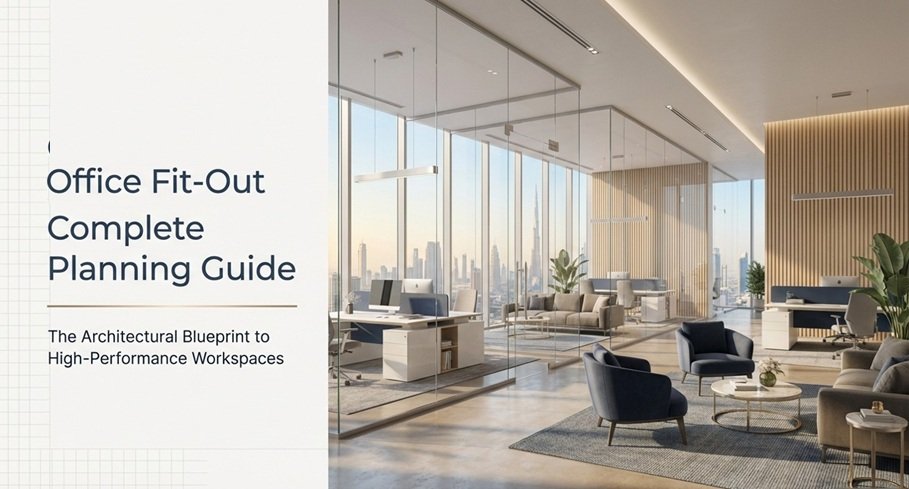
This authoritative guide developed with insights drawn from decades of commercial fit-out experience across the Phoenix Metro area walks you through every critical stage of the process: from initial briefing and authority approvals to MEP coordination, IT infrastructure, ergonomic workspace planning, and final handover. Whether you are a start-up fitting out 200 sq ft of co-working space or a multinational corporation executing a Category B commercial fit-out across three floors, this checklist is your blueprint.
Read every section carefully. Bookmark it, share it with your project team, and use it as a living reference document. By the time you reach the end and the CTA at the bottom, you will have the clarity and confidence to deliver your office setup in Phoenix metro area on time, on budget, and most importantly exactly as you envisioned.
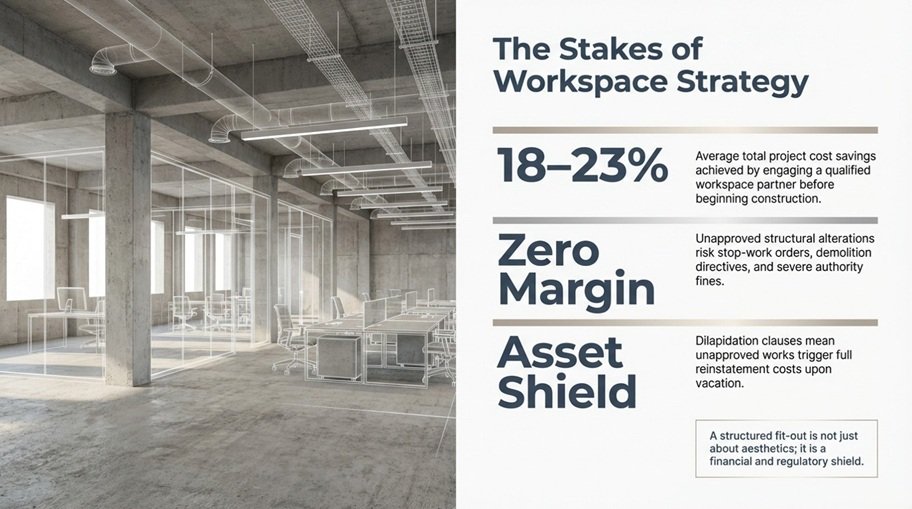
The Phoenix metro regulatory environment is precise and, in many cases, unique. An unapproved structural alteration can result in stop-work orders, demolition directives, and fines that dwarf the original fit-out budget.
Beyond compliance, structured planning directly influences your return on investment. Research by CBRE consistently shows that organizations that engage a qualified workspace planning from day one save an average of 18–23% on total project costs compared with those who begin construction before completing design and approval cycles.
A comprehensive office design checklist also protects the landlord relationship. Most Phoenix metro lease agreements include dilapidation clauses, meaning unapproved alterations can trigger full reinstatement costs upon vacation. Planning well from the outset preserves both your deposit and your reputation as a commercial tenant.
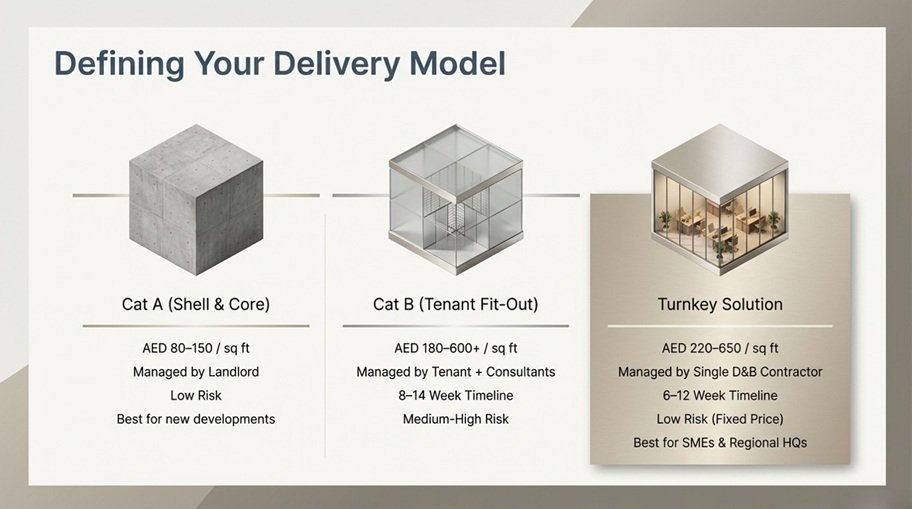
Category A fit-out transforms a raw shell-and-core unit into a lettable space. It typically includes raised access floors, suspended ceilings, basic mechanical and electrical distribution, fire detection systems, and toilet facilities. Landlords usually bear the cost of Category A works, or they may offer a fit-out contribution (FOC) incentive to attract quality tenants.
This is the primary focus of most businesses. Category B covers everything a company needs to be operational: partitioned meeting rooms, feature reception areas, branded design elements, custom joinery, specialist lighting, IT infrastructure, kitchen and breakout zones, and the selection of office furniture tailored to the brand identity. This is where the bulk of your office fit-out checklist applies.
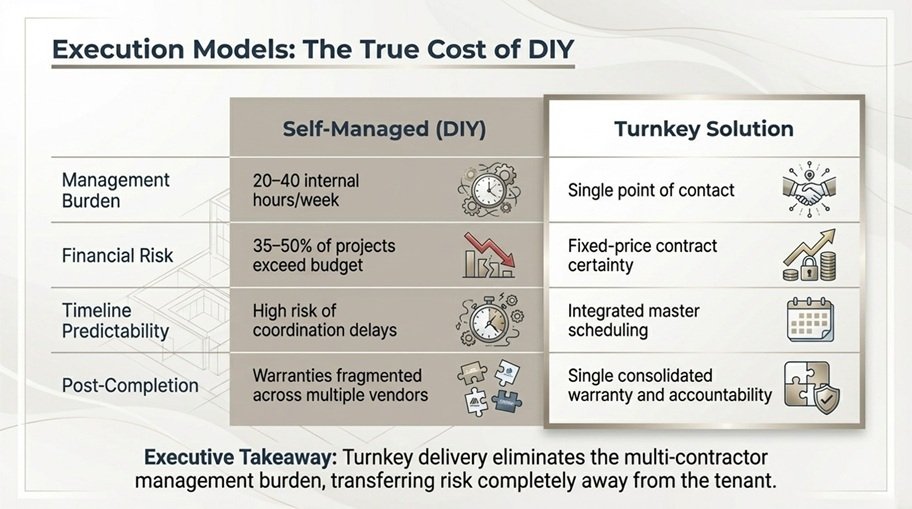
A growing preference among Phoenix metro businesses particularly SMEs and regional headquarters is the turnkey model. Here, a single design-and-build firm handles everything from conceptual design to furniture procurement, authority approvals, construction, IT cabling, and final handover. Turnkey office solutions Phoenix significantly reduce the project management burden on internal stakeholders and offer fixed-price certainty. Easy Spaces specializes in delivering turnkey office solutions across Phoenix metro, Las Vegas, and the southwest.
Fit-Out Type Comparison
Use this as a project framework. Each phase must be signed off before the next begins. Skipping phases is the single most common cause of cost overruns in commercial fit-out Phoenix projects.
Phase 1 — Discovery & Briefing (Weeks 1–2)
Phase 2 — Design & Space Planning (Weeks 2–5)
Phase 3 — Authority Approvals (Weeks 4–8)
Phase 4 — Procurement & Pre-Construction (Weeks 5–9)
Phase 5 — Construction & Installation (Weeks 8–14)
Phase 6 — Furniture, IT & Fit-Out Completion (Weeks 12–16)
Project Timeline Breakdown — Typical Category B Fit-Out (1,000–2,000 Sq Ft)
Accurate budgeting is the foundation of a successful office renovation PHOENIX METRO project. Costs vary significantly based on zone, specification level, and the chosen delivery model. The following benchmarks are derived from live market data across Phoenix’s major commercial districts.
Budget Rule of Thumb: For a mid-range Category B fit-out in Phoenix, plan for AED 280–420 per sq ft (construction only). Add AED 60–120 per sq ft for quality office furniture specification, and 10–12% for project management and contingency.
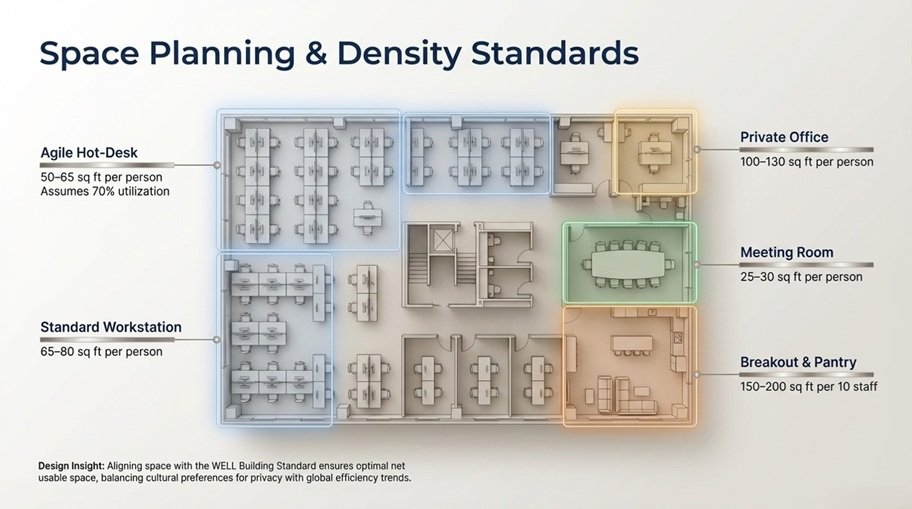
International space benchmarks are shifting as agile working takes hold. The WELL Building Standard and BOMA guidelines recommend minimum net usable space per person. In the Phoenix Metro context, the following figures are widely adopted by leading workspace planning Phoenix consultants and reflect both local preferences (privacy, hierarchy, hospitality) and global efficiency trends.
MEP works are the backbone of any functional workplace and routinely account for 30–45% of total construction costs in a commercial fit-out Phoenix project. Poor MEP coordination is the primary trigger for post-completion complaints acoustic failure, inadequate cooling, electrical outages, and plumbing leaks.
6.1 Mechanical — HVAC & Ventilation
Phoenix’s climate demands best-in-class cooling. Most commercial buildings are served by central chilled water systems, distributed via fan coil units (FCUs). Your fit-out must coordinate FCU positioning, fresh air quantities, and supply/return duct routing with the building services engineer.
6.2 Electrical — Power, Lighting & Building Management
A typical Category B office requires 60–80W of connected load per sq ft (inclusive of HVAC). Confirm available load from the base building’s distribution board before finalizing your electrical design.
6.3 Plumbing & Drainage
Office fit-out plumbing primarily covers kitchen/pantry areas, toilet facilities, and any specialized facilities in the Phoenix Metro workplace design.
A modern office setup Phoenix Metro demand that IT infrastructure is designed concurrently with architecture not retrofitted after construction. The cost of remediation (core-drilling finished floors, exposing ceilings) far exceeds early-stage investment in coordinated IT design.
7.1 Structured Cabling
7.2 Server Room / IT Room Design
7.3 Wireless & AV
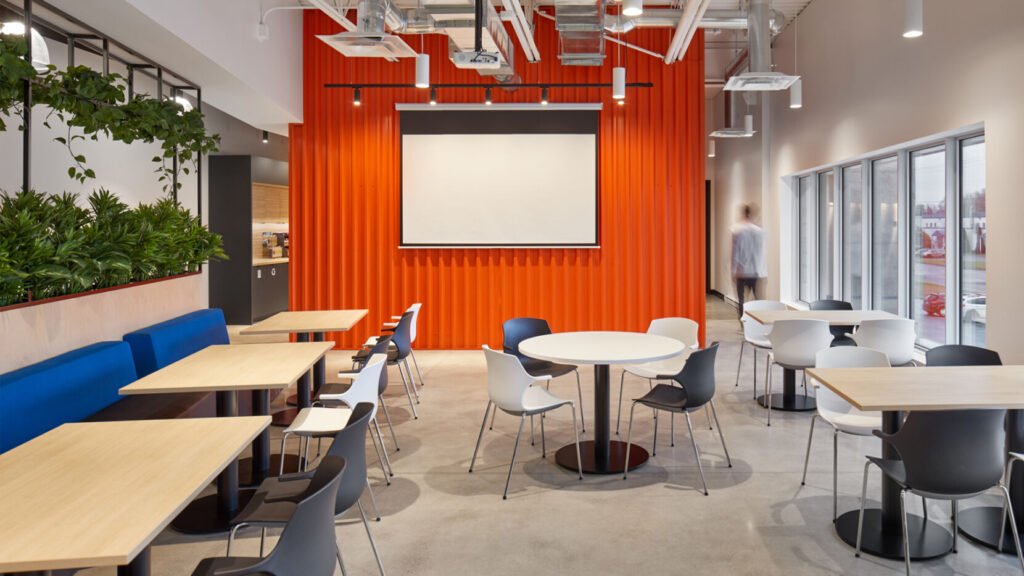
Research published in the Journal of Environmental Psychology and WELL Building Standard literature confirms a direct correlation between lighting quality and cognitive performance, mood, and circadian health. In Phoenix’s largely interior-facing offices particularly in towers where perimeter glazing is often limited by solar gain management artificial lighting design takes on heightened importance.
8.1 Illuminance Targets (Phoenix Green Building Regulations)
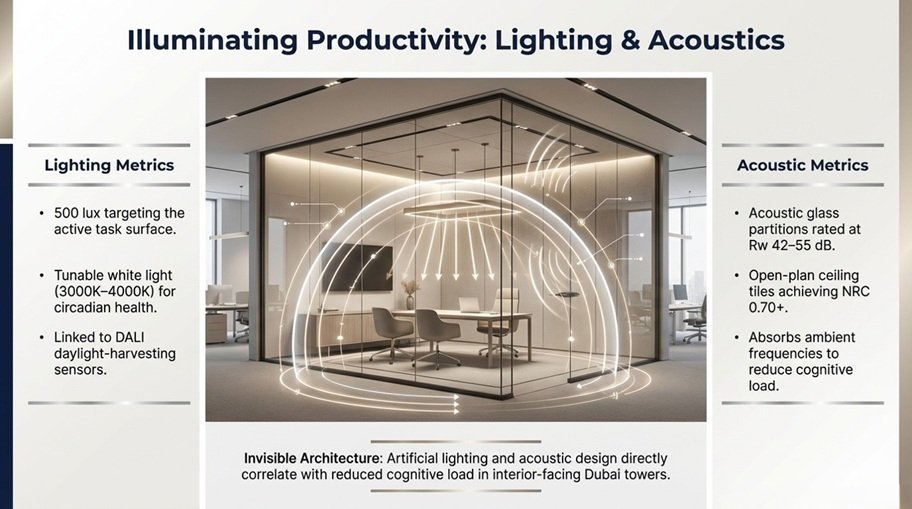
8.2 Smart Lighting Controls
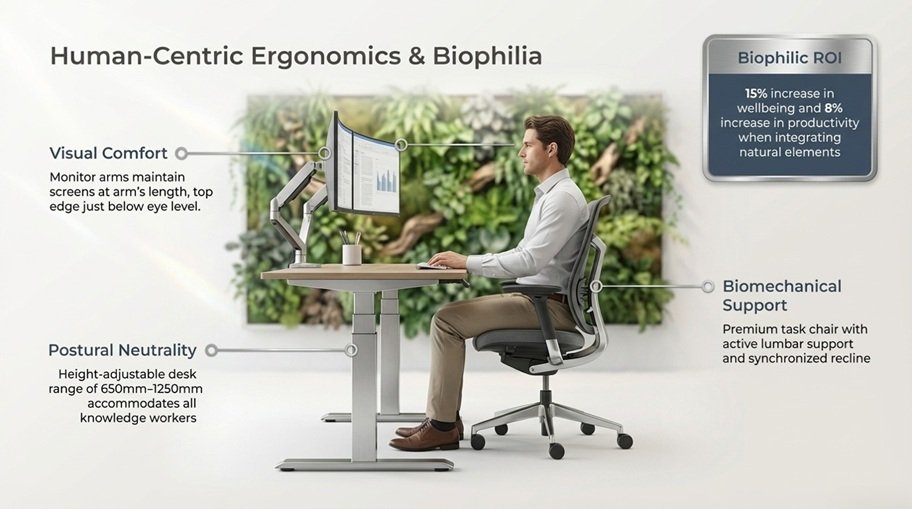
Ergonomics in the modern Phoenix Metro workplace transcends adjustable chairs. A truly ergonomic workspace planning Phoenix strategy addresses posture, acoustics, thermal comfort, visual comfort, cognitive load, and the social dynamics of the team holistically. Forward-thinking companies are aligning their office interior design Phoenix Metro with the WELL Building Standard (WELL v2) or the Fitwel framework.
9.1 Ergonomic Furniture Standards
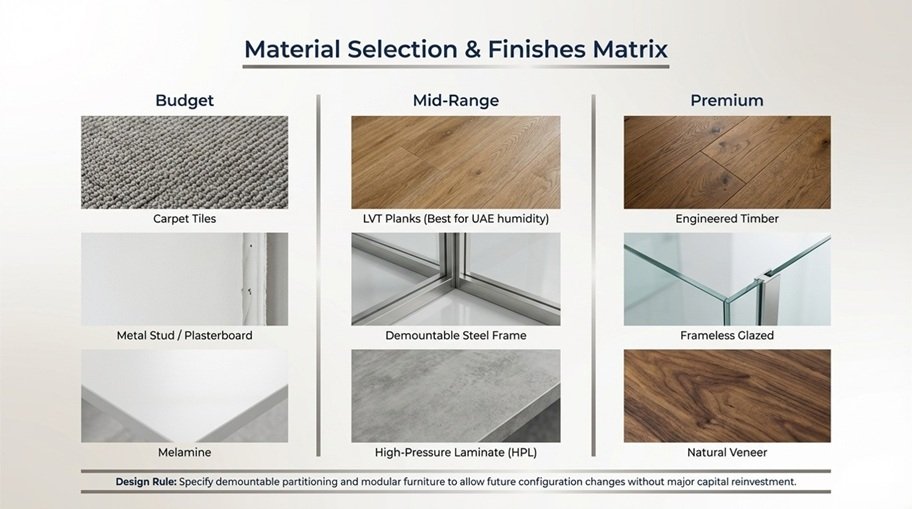
Selecting the right office furniture is foundational. Premium office furniture Phoenix suppliers offer height-adjustable desks (sit-stand), lumbar-supportive seating, and monitor arms that enable true postural neutrality. The minimum ergonomic specification for a contemporary Phoenix Metro office should include:
9.2 Acoustic Comfort
9.3 Biophilic Design
Biophilic design incorporating natural elements into the workplace is proving to be one of the highest ROI investments in office interior design for the Phoenix Metro area. Studies by Human Spaces indicate a 15% increase in wellbeing and an 8% increase in productivity in offices with biophilic elements.
Phoenix’s commitment to net-zero by Net Zero by 2050 Strategic Initiative is cascading directly into commercial fit-out regulation. Approved by the City Council in 2021, the Climate Action Plan focuses on reducing emissions through enhanced public transit, energy efficiency, and waste reduction
10.1 Key Sustainability Measures for Office Fit-Outs
10.2 Green Certifications Available in Phoenix
The contractor you appoint will make or break your project. Phoenix’s fit-out market is large, diverse, and uneven in quality. Use the following criteria to objectively evaluate and compare proposals from commercial fit-out Phoenix firms.

11.1 DIY Fit-Out vs. Turnkey Solution — Detailed Comparison
A fit-out is not complete at handover. Leading organizations conduct a formal Post-Occupancy Evaluation (POE) 4–6 weeks after move-in to validate that the space performs as designed and to identify any ergonomic, environmental, or operational issues.
Post-Occupancy Evaluation Checklist
Book an appointment here for a free consultation